


Developing a Minimum Viable Product (MVP) can feel like a high-wire act in the fast-paced world of startups. Get it right, and you’re on the path to success; get it wrong, and you might find yourself in freefall. MVPs offer a chance to test your business ideas with minimal risk, but common pitfalls lurk in the shadows. These mistakes can derail your project before it even gets off the ground. Understanding these missteps can mean the difference between a runaway success and a costly failure.
Are you ready to uncover the MVP blunders that could be quietly sabotaging your startup dreams?

Feature Overload
Feature overload can sink even the most promising MVP. In the rush to impress users and investors, startups often cram too many features into their initial product. This approach dilutes the core value of your MVP, making it harder for users to grasp the primary benefit. Instead, focus on identifying and developing core features that solve the problem you're addressing.
When entrepreneurs prioritize quantity over quality, they risk losing focus. More features don't necessarily mean a better product. In fact, they often result in a cluttered user experience that frustrates rather than delights. Product managers should aim for simplicity, enhancing the user experience by delivering a clear and concise product that does one thing exceptionally well.
Developers, too, pay a heavy price for feature overload, often dealing with technical debt as they try to manage excessive features. This can slow down future development and increase maintenance costs. Investors, on the other hand, tend to favor MVPs with clear and concise functionalities. They want to see a product with a laser-focused value proposition, one that can be easily communicated and understood.
.avif)
Remember, excessive features can lead to feature creep, which is a common pitfall. By concentrating on core features, you can develop a product that resonates with users and stands a better chance of capturing the interest of investors.
Lack of User Feedback
Neglecting user feedback is like flying blind. Start-up founders who skip this step miss out on valuable insights that could steer their MVP toward success. Gathering feedback early on allows you to understand user pain points and make necessary adjustments before it's too late. Entrepreneurs who tap into this goldmine of information can tailor their product more closely to user needs.
Product managers should incorporate feedback into their development process. This practice not only helps refine the MVP but also fosters a sense of ownership among users. When users feel heard, they're more likely to become advocates for your product. Developers, too, create better products when they listen to what users have to say. Feedback can highlight areas for improvement that might not be apparent from within the development bubble.
Investors, meanwhile, appreciate MVPs that adapt based on real-world usage. They want to see a product that evolves in response to user feedback, demonstrating a commitment to delivering real value. User experience should be at the forefront of your MVP development, and collecting as much feedback as possible is the key to achieving that.
Ignoring Research
Skipping market research is a surefire way to jeopardize your MVP's success. Without data-driven insights, you're essentially shooting in the dark, hoping to hit a target you can't see. Entrepreneurs need to base their decisions on solid research if they want to make informed choices about their product's direction.
Product managers should study competitors to identify market gaps and opportunities. This analysis provides a roadmap for where your MVP can fit in and stand out. Developers, too, gain direction from thorough research and analysis. This foundation helps streamline the development process and ensures the product aligns with market needs.
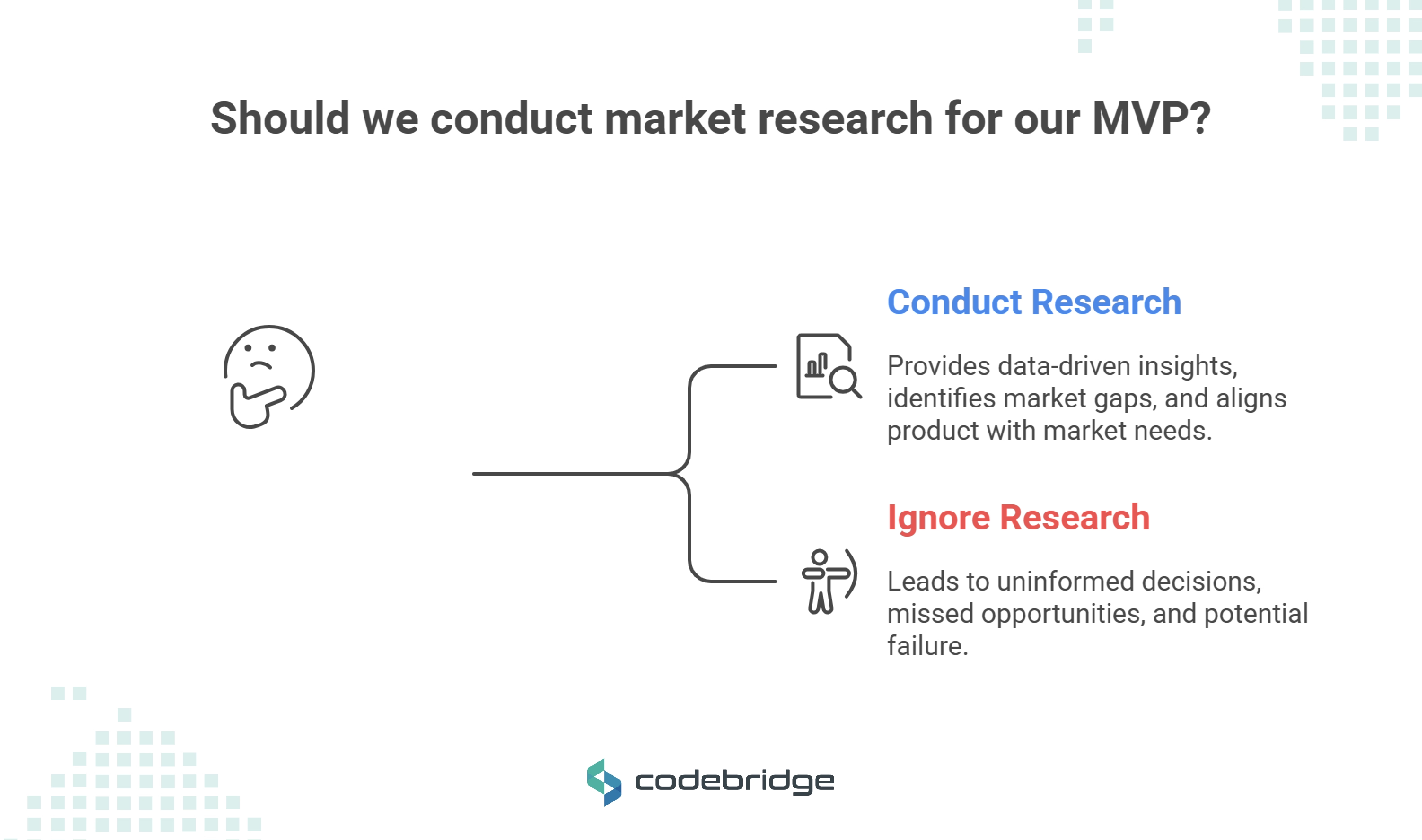
Investors look for MVPs backed by solid research and a deep understanding of the market landscape. They want assurance that your product has a place and a demand in the market. Ignoring this crucial step is one of the most common mistakes in the development process, one that can cost you dearly in the long run.

Rushing Development
In the race to launch, start-ups often compromise quality by rushing the development process. However, speed isn't always your friend. Entrepreneurs should prioritize thorough planning over hastily meeting deadlines. Without a solid plan, you risk launching an unstable product that could damage your brand.
Product managers need to resist the urge to hurry, as this can lead to a flawed product that fails to meet user expectations. Developers also require adequate time for coding and debugging. Quality takes time, and cutting corners early on can lead to headaches down the road.
Investors value MVPs that demonstrate careful and deliberate development. They want to see that you're committed to delivering a high-quality product. Agile development practices can help balance speed and quality, allowing you to iterate quickly while maintaining high standards.
Poor Team Collaboration
A lack of effective communication can cripple even the most talented team. Start-ups struggle when team members operate in silos, missing out on the synergy that comes from collaboration. Entrepreneurs should foster an environment where open dialogue and teamwork are the norms.
Product managers benefit from aligning team goals and objectives, ensuring everyone is pulling in the same direction. Developers produce better results when they collaborate, sharing ideas and solutions to common challenges. A cohesive team is more than the sum of its parts, leading to innovations that might not emerge in isolation.
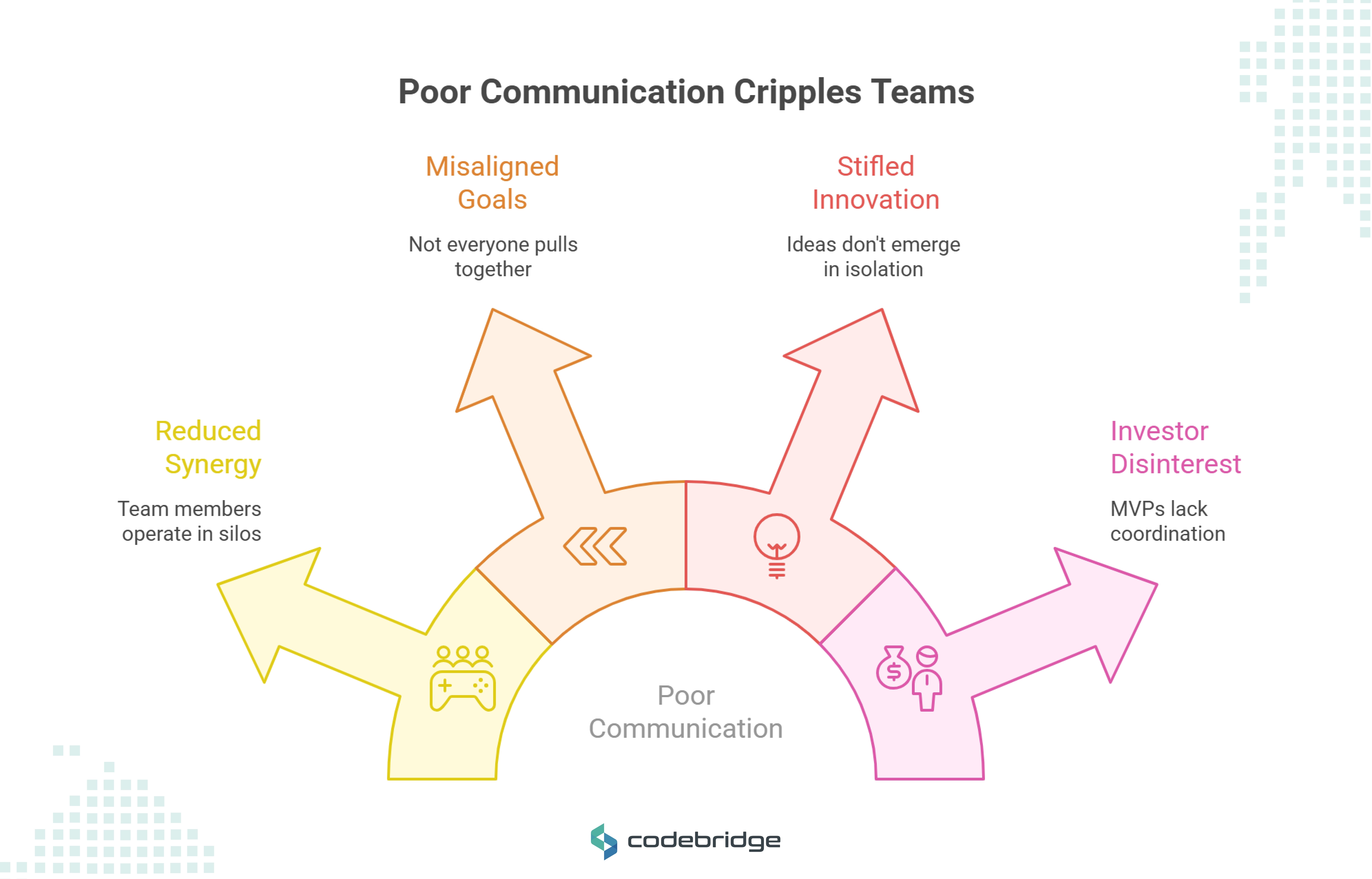
Investors prefer MVPs born from well-coordinated teams. They recognize that collaboration often leads to superior products. Don't let poor team dynamics derail your project. Invest in building a strong development team and facilitate effective communication among all stakeholders.
Not Having a Clear Strategy
Without a clear strategy, startups often flounder, unable to find their footing. A well-defined plan of action is critical for guiding your MVP development. Entrepreneurs must have clear objectives that drive decision-making and set the direction for the project.
Product managers should set measurable goals and milestones to track progress. This approach ensures that the team stays focused and aligned with the overarching vision. Developers work more efficiently with a structured roadmap, knowing exactly what needs to be accomplished and when.
Investors trust MVPs that follow a strategic and coherent path. They want to see a plan that outlines how you'll reach your goals and overcome potential obstacles. A lack of strategy is like setting sail without a map; you're likely to get lost along the way.
Overlooking Testing and Validation
Neglecting testing can lead to significant setbacks. Start-ups that skip thorough testing run the risk of launching a product riddled with issues. Entrepreneurs should prioritize validation to confirm their product's viability and ensure it meets user expectations.
Product managers need to identify and fix issues before the launch. This practice not only improves the user experience but also prevents costly fixes later on. Developers rely on testing to deliver a reliable and functional product. It's much easier to address problems during development than post-launch.
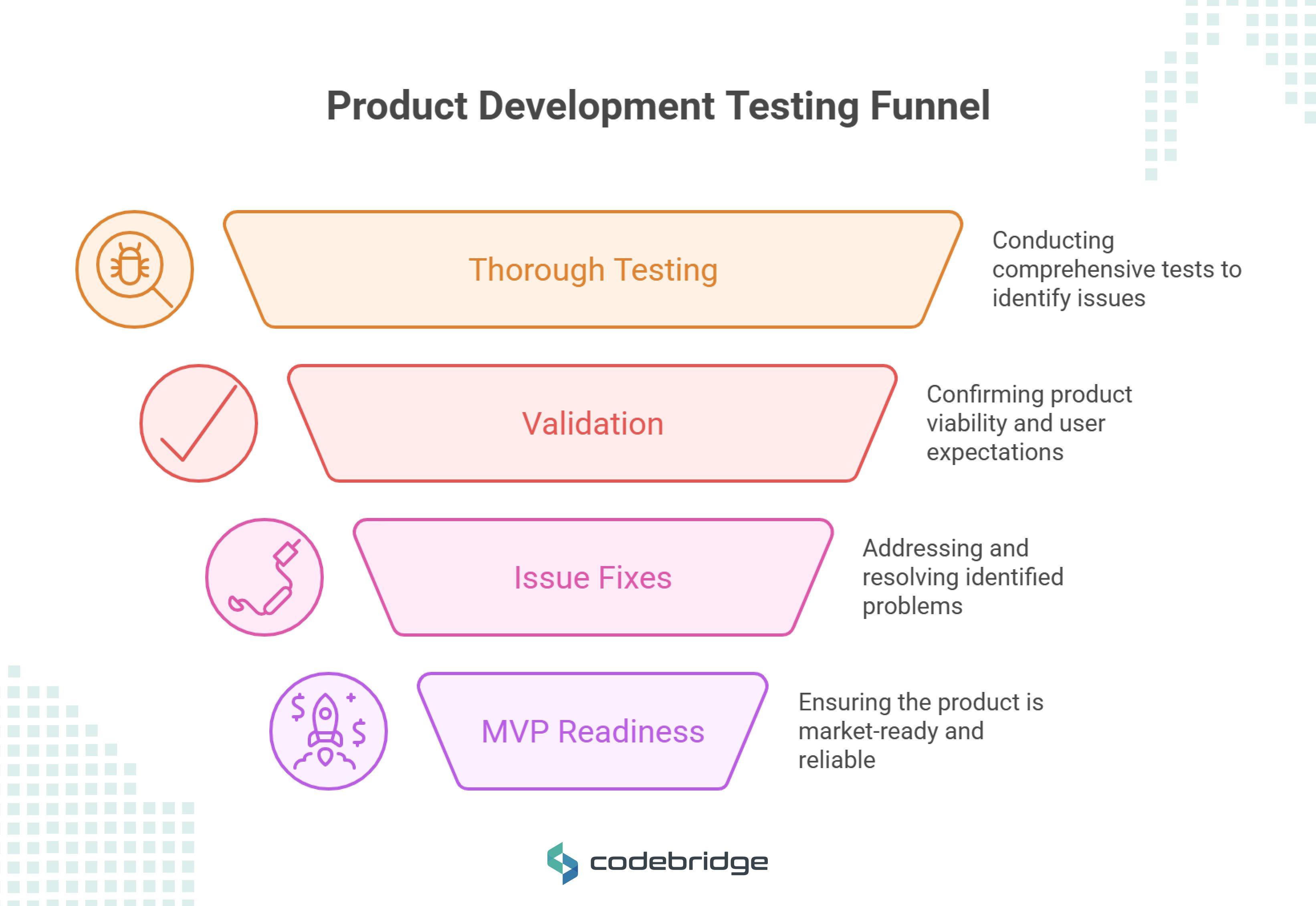
Investors seek MVPs that have undergone rigorous testing and validation. They want assurance that your product is ready for the market and capable of delivering on its promises. Don't let your MVP stumble out of the gate. Make testing a cornerstone of your development process.
Focusing on Perfection
In the quest for an unattainable level of perfection, many start-ups delay their progress. Striving for perfection can lead to endless cycles of revision and refinement, preventing you from ever launching. Entrepreneurs should embrace iterative improvement over flawless execution, recognizing that feedback-driven enhancements post-launch can be just as valuable.
Product managers risk missing opportunities by waiting too long to launch. The market is constantly changing, and what seems perfect today might be outdated tomorrow. Developers, too, benefit from launching and then improving based on real-world feedback. This approach not only accelerates time-to-market but also allows for more agile responses to user needs.
Investors appreciate MVPs that evolve and adapt quickly. They understand that success often comes from learning and iterating rather than waiting for perfection. The risk of failure is lower when you embrace a mindset of continuous improvement rather than one of unattainable perfection.
Ignoring Market Demand
Overlooking market demand is a misstep that can doom your MVP. Start-ups fail when they don't align their product with current market trends. Entrepreneurs need to ensure their MVP addresses real-world problems and meets the needs of potential customers.
Product managers should focus on features that solve actual pain points, rather than what they assume users want. Developers, too, should tailor their work to address customer needs. This alignment with market demand increases the likelihood of market success and long-term viability.

Investors want MVPs that cater to proven and existing market demand. They are more likely to support products that demonstrate a clear understanding of their target audience and a strong potential for adoption. Ignoring this critical aspect can leave your MVP floundering without a market to support it.
Conclusion
Avoiding these common pitfalls is crucial for MVP success. By learning from these mistakes, start-up founders gain a competitive edge and can drive their projects toward a bright future. Entrepreneurs who adopt best practices in MVP development are more likely to create products that resonate with users and attract investor interest.
Product managers play a key role in steering their teams clear of these errors, ensuring a focus on innovation and quality. Developers, too, contribute to a successful product by adhering to sound principles and strategies. Investors, recognizing the potential of well-executed MVPs, are more inclined to support ventures built on a solid foundation.
Want to avoid these mistakes and launch an MVP without setbacks? Reach out to Codebridge — we’ll help you turn your idea into a successful product.
FAQ
What are the most common MVP development mistakes to avoid?
When developing an MVP, it is crucial to avoid common mistakes such as overcomplicating the features, not conducting enough user testing, ignoring feedback from users, not prioritizing essential features, and underestimating the time and resources needed for development.
How can I ensure that my MVP development process is successful?
To ensure a successful MVP development process, it is important to define clear goals and objectives, involve stakeholders from the beginning, prioritize features based on user feedback, conduct thorough testing, iterate based on feedback, and allocate enough time and resources for development.
How can I avoid underestimating the time and resources needed for MVP development?
To avoid underestimating the time and resources needed for MVP development, it is essential to break down the project into smaller tasks, create a realistic timeline, allocate resources effectively, communicate clearly with the development team, and regularly track progress to identify any potential delays or roadblocks.
Why is user feedback important during MVP development?
User feedback is crucial during MVP development as it helps to validate assumptions, identify pain points, improve user experience, prioritize features, and ensure that the final product meets the needs and expectations of the target audience.
What are the consequences of ignoring user feedback during MVP development?
Ignoring user feedback during MVP development can lead to a product that does not resonate with the target audience, wasted time and resources on unnecessary features, poor user experience, low adoption rates, and ultimately, the failure of the MVP. mistakes viable product mistakes mistakes mistakes viable product viable product viable product viable product startup business business business business mvp software development






Heading 1
Heading 2
Heading 3
Heading 4
Heading 5
Heading 6
Lorem ipsum dolor sit amet, consectetur adipiscing elit, sed do eiusmod tempor incididunt ut labore et dolore magna aliqua. Ut enim ad minim veniam, quis nostrud exercitation ullamco laboris nisi ut aliquip ex ea commodo consequat. Duis aute irure dolor in reprehenderit in voluptate velit esse cillum dolore eu fugiat nulla pariatur.
Block quote
Ordered list
- Item 1
- Item 2
- Item 3
Unordered list
- Item A
- Item B
- Item C
Bold text
Emphasis
Superscript
Subscript



.jpg)