The global Software Development Outsourcing industry in 2026 is undergoing an unprecedented transformation, driven by technological breakthroughs, economic dynamics, and shifting client priorities. Organizations are no longer simply trading labor arbitrage for code delivery; they are forging strategic partnerships that blend domain expertise, advanced tooling, and AI-driven innovation. In this environment, the outsourcing cost debate has matured into a sophisticated analysis of value‐creation pipelines, productivity accelerators, and risk mitigation frameworks.
Several forces are converging:
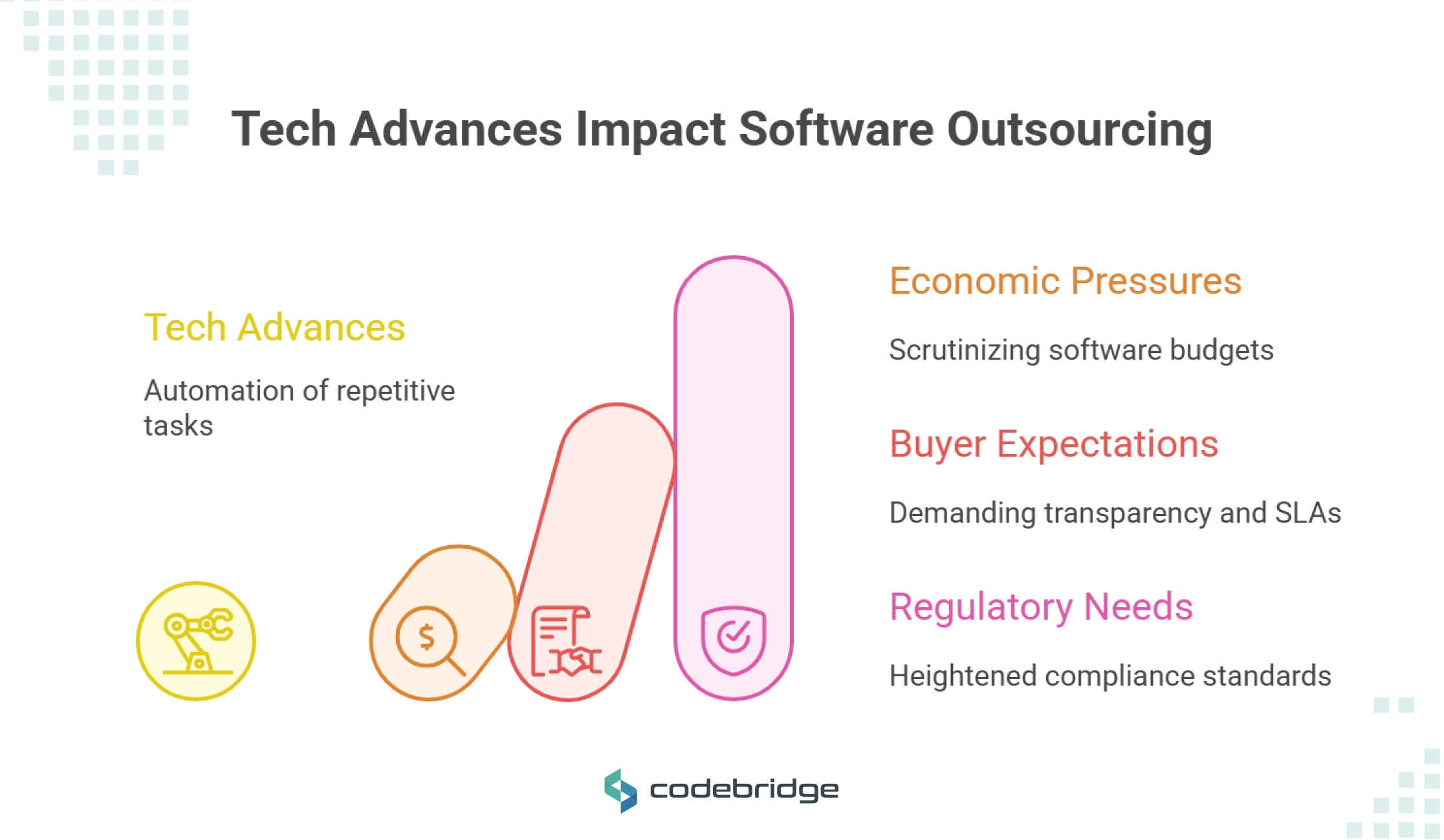
- Technological Advancements: The rise of large language models (LLMs), AI‐powered DevOps platforms, and next‐generation low-code/no-code frameworks enables unprecedented automation of repetitive tasks, from boilerplate code generation to regression test creation.
- Economic Pressures: Amid global inflationary trends, unpredictable supply chains, and shifting geopolitical alliances, firms are scrutinizing every dollar in their software budgets. The cost to outsource has become a lever for both cost containment and strategic reinvestment.
- Evolving Buyer Expectations: Today’s outsourcing clients demand transparency, detailed rate cards, clear service-level agreements (SLAs), and real-time dashboards that track resource utilization and AI-assisted productivity metrics. Hybrid engagement models, such as outcome-based pricing and subscription subscriptions, redefine the cost of outsourced IT equation.
- Regulatory & Security Requirements: Heightened compliance standards (GDPR, SOC 2, HIPAA) and cybersecurity mandates compel outsourcing vendors to adopt rigorous processes and secure DevOps practices. These add layers of oversight that influence the offshore software development costs and require specialized talent and tooling.
As businesses pivot toward digital resilience and continuous innovation, Software Development Outsourcing providers must evolve beyond traditional Time & Materials or fixed-price contracts. Leading firms are offering comprehensive managed services, blending AI-augmented development, continuous integration/continuous deployment (CI/CD) pipelines, and dedicated centers of excellence. By aligning costs of outsourcing it with tangible business outcomes, vendors position themselves as strategic advisors rather than mere code factories.
To stay competitive, businesses must collaborate with technology partners who not only deliver code but also drive measurable business outcomes.
Explore our Custom Software Development Services to accelerate innovation, optimize performance, and unlock lasting digital advantage.

Average Software Development Rates by Region in 2026
Selecting the optimal geographical region for Software Development Outsourcing is a critical decision that balances budget, quality, and operational alignment. Below is a detailed regional analysis of average hourly rates and strategic advantages:
North America
- Rates: $120–$200/hour
- Key Strengths: Access to top-tier talent with deep industry domain knowledge in finance, healthcare, aerospace, and defense.
- Operational Advantages: Seamless collaboration in local time zones, mature legal frameworks for IP protection, and adherence to strict data privacy regulations.
- Considerations: High outsourcing software development costs reflect salary benchmarks, overhead for onshore offices, and benefits packages.
- Use Cases: Enterprise-scale cloud migrations, AI/ML research and development, mission-critical system integrations.
Western Europe
- Rates: $90–$150/hour
- Key Strengths: Highly qualified engineers, multilingual capabilities, and strong compliance with GDPR and industry standards (ISO 27001, CMMI Level 3+).
- Operational Advantages: Cultural affinity with North American clients, robust government incentives for R&D projects.
- Considerations: Moderately high cost of outsourcing app development due to social security contributions and labor regulations.
- Use Cases: Fintech platform builds, embedded automotive software, renewable energy management systems.
Eastern Europe
- Rates: $25–$45/hour
- Key Strengths: Exceptional technical education, thriving tech hubs in Poland, Ukraine, Romania, and the Czech Republic.
- Operational Advantages: Fluent English communication, Western-aligned work culture, and reduced business continuity risks compared to offshore regions.
- Cost Profile: Eastern Europe offers the most competitive offshore software development costs without compromising on quality.
- Use Cases: Full-stack web/mobile applications, AI-driven prototypes, cloud-native microservices, blockchain implementations.
- Spotlight on Codebridge: Codebridge’s senior teams start at $30/hour, combining AI-enabled workflows, dedicated DevOps automation, and transparent rate cards that clearly break down the cost to outsource per role and per sprint.
South Asia & Latin America
- Rates: $20–$35/hour
- Key Strengths: Vast talent pools in India, Bangladesh, Brazil, and Mexico; government initiatives to support IT exports.
- Operational Advantages: Cost arbitrage for bulk feature builds, support services, and non-customer-facing tasks; partial time-zone overlaps.
- Considerations: Potential variability in communication quality, cultural nuances, and project management maturity can influence the outsourced IT cost curve.
- Use Cases: Back-office automation, legacy system maintenance, large backlogs of incremental feature development.
Key Factors That Influence Outsourcing Prices
Understanding the drivers behind Software Development Outsourcing pricing enables smarter vendor comparisons and budget planning. The following components shape the outsourcing cost structure:
1. Seniority & Specialized Skills
- Rate Multipliers: Senior engineers command 1.5–2× the rates of mid-level counterparts. Niche expertise (AI/ML, blockchain, cybersecurity) adds a 20–30% premium.
- Typical Rates: Senior AI Engineer ($80–$100/hr), Mid-Level Full-Stack Developer ($40–$60/hr), Junior QA Analyst ($25–$35/hr).
- Impact on Costs: Projects requiring specialized architectures or rigorous security audits will see elevated outsourcing software development costs proportional to the seniority mix.
2. Team Composition & Structure

- Lean Squads: Optimal blends often comprise 60% mid-level developers and 40% seniors, plus specialized QA and DevOps engineers.
- Role Breakdown:
- 1–2 Senior Architects/Tech Leads
- 2–3 Mid-Level Full-Stack Developers
- 1 QA Engineer (AI-driven test automation)
- 1 Part-Time Project Manager/Scrum Master
- Cost Implications: Balanced teams deliver high-quality output with lower defect rates, reducing cumulative cost of outsourcing IT due to fewer rework cycles and accelerated sprint velocity.
3. Engagement Model
- Time & Materials (T&M):
- Flexibility for evolving requirements.
- Requires vigilant budget tracking to manage offshore software development costs.
- Fixed-Price:
- Predictable budgets for well-scoped MVPs.
- Potential trade-offs on scope or timeline if initial estimates prove optimistic.
- Retainer/Subscription:
- Guaranteed resource availability with minimum and maximum hour thresholds.
- Stabilizes cost to outsource by mitigating rate fluctuations over extended engagements.
- Outcome-Based Pricing:
- Pricing tied to delivery milestones or business KPIs (e.g., user activation, revenue growth).
- Encourages vendor accountability and aligns outsourcing software development costs with ROI.
4. AI-Assisted Productivity
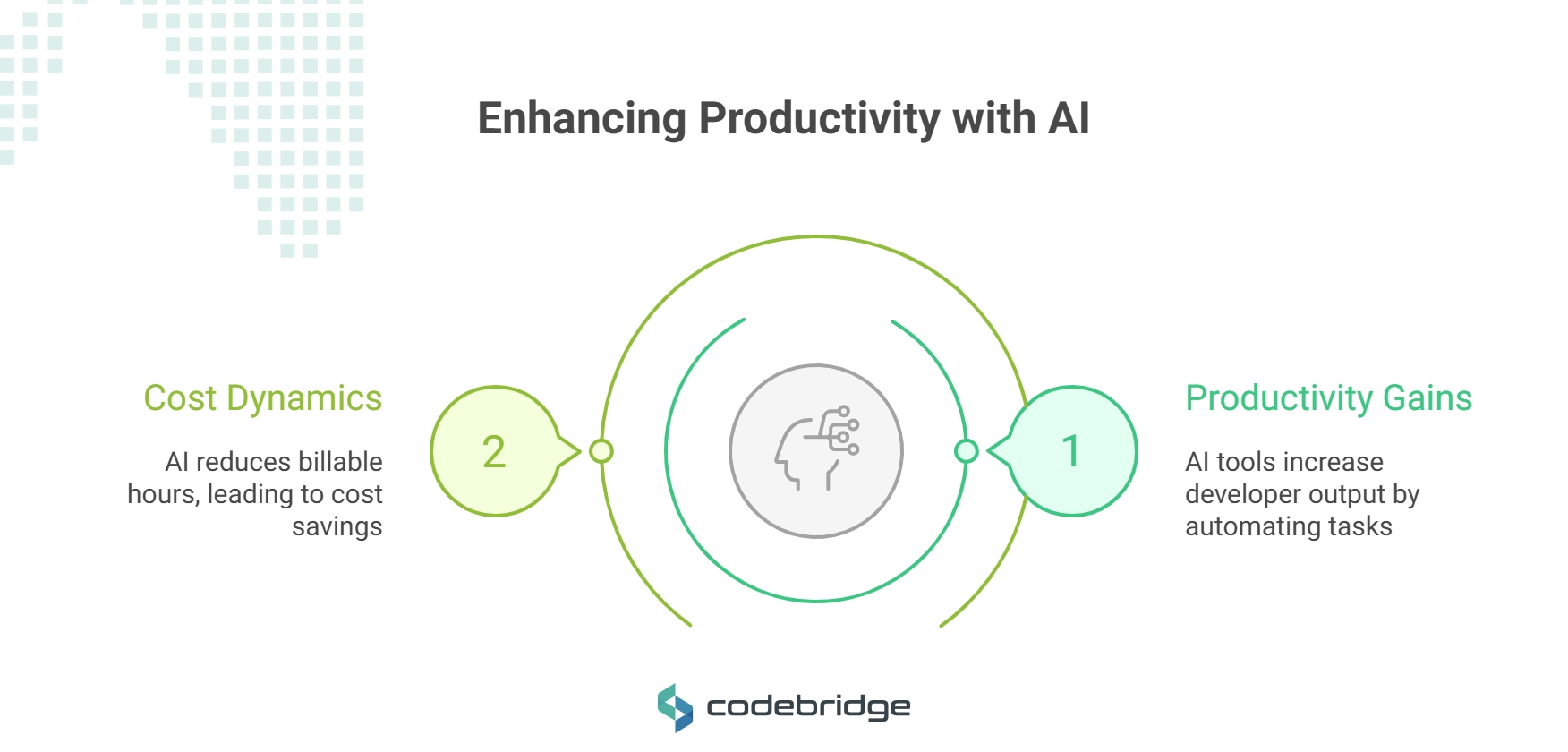
- Productivity Gains: AI tools boost developer throughput by up to 30%, primarily by automating routine tasks, code generation, refactoring suggestions, and test case creation.
- Cost Dynamics: Although hourly rates remain constant, AI-driven workflows reduce the total number of billable hours, delivering significant savings on the costs of outsourcing it.
5. Infrastructure & Tooling Overhead
- Cloud & DevOps: Provisioning environments, setting up CI/CD pipelines, and ensuring secure infrastructure, as-a-code governance, influence effective utilization rates.
- Third-Party Licensing: Automated monitoring, security scanners, and performance testing tools add incremental costs that vendors often amortize into blended rates, subtly affecting the cost of outsourcing software development.
How AI Is Transforming Software Development Costs
AI integration has fundamentally altered both the delivery and the economics of Software Development Outsourcing.
AI’s Effect on Hourly Rates vs. Total Project Budgets
The adoption of AI automation in our processes hasn’t lowered our hourly charges; instead, it empowers our teams to deliver far more within the same time frame, explains Codebridge’s Head of Sales. Clients experience up to 40% faster feature delivery and 60% fewer defects, dramatically reducing the cost of outsourced IT per functional module.
Key AI-driven transformations:
- Automated Code Generation & Refactoring:
- Tools like GitHub Copilot and customized LLM prompt frameworks handle repetitive coding tasks, enforce style standards, and optimize performance.
- Result: Mid-level engineers achieve senior-level output efficiency, lowering the offshore software development costs associated with manual refactoring.
- AI-Powered Testing & QA:
- Test bots generate exhaustive unit, integration, and performance test suites.
- Predictive defect analysis pinpoints high-risk modules, enabling targeted manual reviews.
- Outcome: QA cycles shrink by up to 50%, reducing manual outsourcing software development costs in testing.
- Intelligent Project Forecasting:
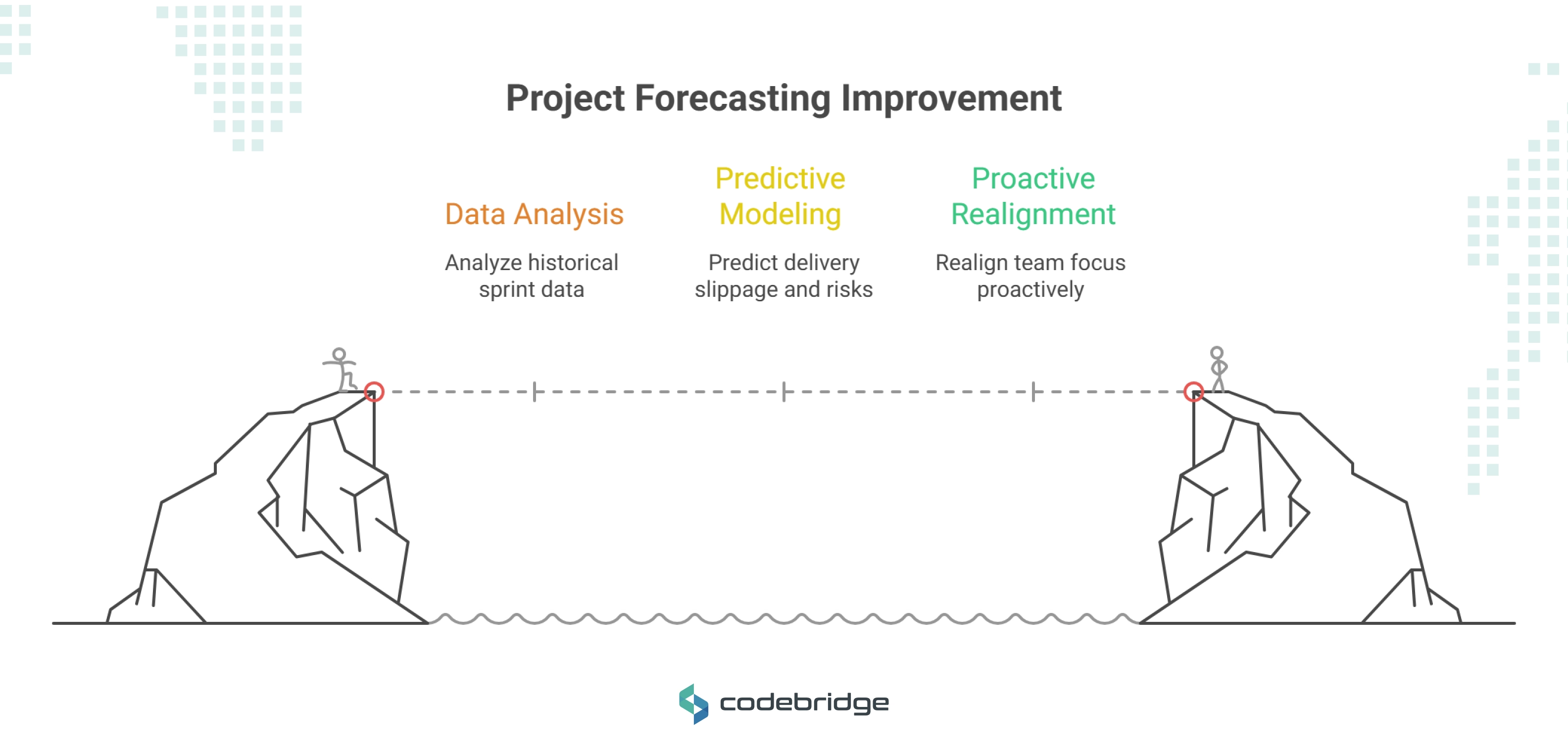
- Machine-learning models analyze historical sprint data to predict delivery slippage, resource bottlenecks, and risk factors.
- Continuous feedback loops allow proactive realignment of team focus before budget overruns occur, optimizing overall cost to outsource.
- Smart Infrastructure Management:
- AI-based auto-scaling, anomaly detection, and cost-optimization bots continuously tune cloud spend.
- Ensures environments remain cost-efficient, minimizing wasted compute hours, a direct reduction in hidden cost of outsourcing IT.
Cost Trends for 2026: Smaller Teams, Higher Productivity
In 2026, Software Development Outsourcing providers uniformly shift toward leaner, high-impact squads augmented by AI, driving down total project costs and time-to-market.
Lean, Senior-Heavy Teams
- Optimal Size: 5–7 core members, supplemented by fractional DevOps and QA engineers.
- Senior Ratios: Teams increase senior representation (50–60%) to mitigate architectural rework and accelerate decision-making.
- Efficiency Metrics: Lean teams demonstrate 30% faster cycle times and require 40% fewer backlog grooming sessions, translating into lower outsourcing IT costs per release.
Automation & DevOps Maturity
- CI/CD Everywhere: Automated pipelines with built-in security, compliance checks, and blue-green deployments reduce manual oversight.
- Observability & Incident Response: AI-enabled monitoring platforms detect anomalies, auto-remediate where possible, and escalate only critical alerts, shrinking firefighting costs.
Specialist vs. Generalist Trade-Offs
- Specialists: Premium rates for cloud architects, data scientists, blockchain engineers, and cybersecurity analysts.
- Generalists: Full-stack generalists at $35–$50/hour remain essential for rapid MVP development and early-stage PoCs.
- Cost Implication: Strategic balance between deep expertise and generalist agility optimizes the costs of outsourcing it relative to business priorities.
Why Eastern Europe Remains the Best Value Region
Eastern Europe’s sustained leadership in Software Development Outsourcing stems from a potent combination of cultural proximity, technical prowess, and competitive pricing:
Communication & Cultural Alignment
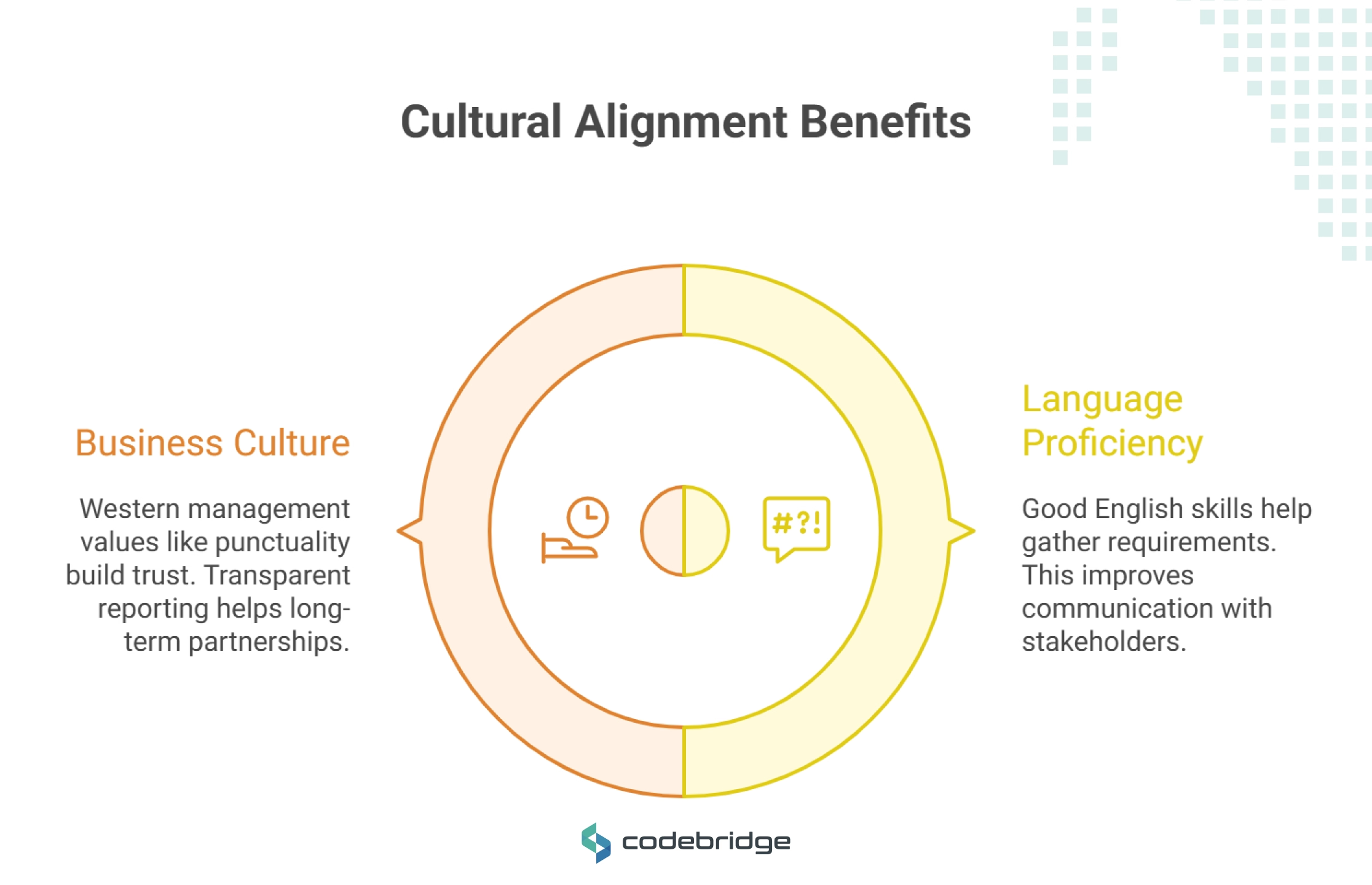
- Language Proficiency: Average English levels of B2–C1 reduce friction in requirements gathering and stakeholder communication.
- Business Culture: Western management practices, emphasis on punctuality, and transparent reporting foster trust and long-term partnerships.
Technical Excellence
- Education Pipeline: Top universities produce engineers fluent in modern frameworks (React, Angular, Node.js) and emerging domains (AI, blockchain).
- Professional Ecosystem: Vibrant tech meetups, hackathons, and open-source contributions cultivate continuous skill development.
Geographic & Time-Zone Advantages
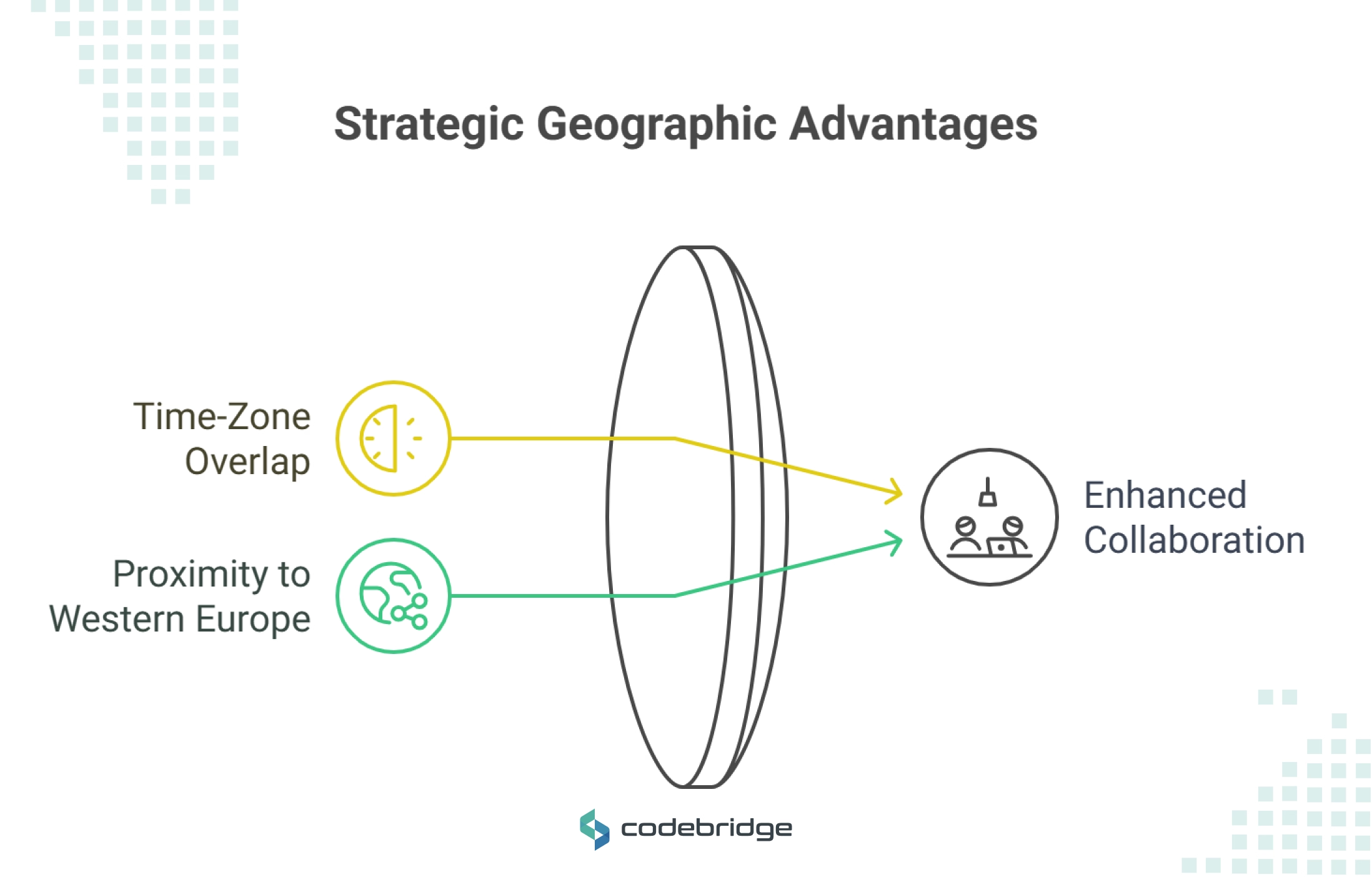
- Overlap: Central/Eastern Europe overlaps 5–7 working hours with North America, enabling near–real-time collaboration.
- Travel & Collaboration: Proximity to Western Europe facilitates onsite visits and client workshops, strengthening relationships and ensuring alignment.
Cost Leadership
- Competitive Rates: $25–$45/hour for senior talent, half the rate of Western Europe.
- Value-Driven Delivery: Clients reinvest savings into product innovation rather than inflated labor budgets.
Codebridge Case Study:
Our clients value the blend of senior expertise, AI-augmented workflows, and transparent pricing, states Codebridge’s Head of Sales. They see a direct correlation between our lean, senior-led teams and accelerated time-to-value, which effectively lowers the cost of outsourcing software development for critical projects.
Outsourcing Cost Benchmarks: 2026 Table
Conclusion: Transparent, AI-Driven, and Value-Focused Outsourcing
As organizations navigate economic headwinds and competitive pressures, Software Development Outsourcing emerges not merely as a cost-cutting tactic but as a strategic enabler for digital acceleration. Vendors that embrace transparency, publishing detailed outsourcing software development costs, showcasing AI-driven productivity gains, and delivering lean, senior-heavy teams, stand out in the 2026 market.
Key Takeaways:
- Value Over Hours: Focus on total project ROI, not just hourly rates.
- AI as a Multiplier: Leverage AI to amplify developer output, reduce manual QA efforts, and shorten delivery cycles.
- Engagement Flexibility: Choose the right blend of T&M, fixed-price, retainer, or outcome-based models to align with business goals and risk appetite.
- Regional Strategy: Eastern Europe continues to offer unparalleled Software Development Outsourcing value, combining competitive rates, high English proficiency, and robust technical expertise.
Explore how Codebridge can help you craft a cost-effective, AI-optimized development strategy, where every facet of your Software Development Outsourcing engagement is transparent, accountable, and geared toward measurable business outcomes.
FAQ
What are the current Software Development Outsourcing rates in 2026?
In 2026, average Software Development Outsourcing rates range from $25–$45/hour in Eastern Europe, $90–$150/hour in Western Europe, $120–$200/hour in North America, and $20–$35/hour in South Asia & Latin America. These regional differences reflect variations in talent supply, operating expenses, and domain expertise.
How can I calculate the outsourcing cost for my software project?
To estimate outsourcing cost, multiply the average regional rate by the total billable hours, then add infrastructure and AI-tooling overhead. For example, a 500-hour Eastern Europe engagement at $35/hour plus 10% for DevOps and AI licenses yields approximately $19,250.
Why do senior engineers command higher cost of outsourced IT?
Senior engineers bring deeper architecture skills, leadership, and reduced defect rates. Their expertise, especially in AI/ML, blockchain, or cybersecurity, adds a 1.5–2× premium over mid-level rates, lowering total rework and accelerating delivery.
What engagement models optimize outsourcing software development costs?
Time & Materials (T&M): Flexible but requires strict budget monitoring.
Fixed-Price: Best for well-scoped MVPs with minimal scope creep.
Retainer/Subscription: Ensures resource availability and predictable cost to outsource.
Outcome-Based: Aligns pricing to KPIs, encouraging vendor accountability and ROI focus.
How does AI reduce overall offshore software development costs without lowering hourly rates?
AI automates repetitive tasks, code generation, testing, and DevOps, boosting productivity by up to 30%. Although rates remain constant, fewer billable hours are needed, cutting total project budgets and accelerating time-to-market.
What team composition delivers the best value for Software Development Outsourcing?
A lean squad of 5–7 members, 60% mid-level and 40% senior developers, plus AI-driven QA and fractional PM, optimizes both quality and cost. This structure minimizes coordination overhead and maximizes sprint velocity.














Heading 1
Heading 2
Heading 3
Heading 4
Heading 5
Heading 6
Lorem ipsum dolor sit amet, consectetur adipiscing elit, sed do eiusmod tempor incididunt ut labore et dolore magna aliqua. Ut enim ad minim veniam, quis nostrud exercitation ullamco laboris nisi ut aliquip ex ea commodo consequat. Duis aute irure dolor in reprehenderit in voluptate velit esse cillum dolore eu fugiat nulla pariatur.
Block quote
Ordered list
- Item 1
- Item 2
- Item 3
Unordered list
- Item A
- Item B
- Item C
Bold text
Emphasis
Superscript
Subscript